What Sitting All Day Does to Your Gut


Eight hours at a desk can leave your hips tight and your back stiff, but your digestive system may notice your workday too. Long periods of sitting are associated with poorer metabolic health, while low physical activity is also linked with a higher risk of constipation. The connection with the gut microbiome is more complicated and still being studied.
The useful takeaway is simple: you do not need to replace your desk job with an active one to support your health. Breaking up long periods of sitting, moving regularly, eating enough fiber, staying hydrated, and supporting your overall gut health can make a desk based lifestyle considerably more balanced.
Here is what we currently know about the effects of sitting all day and what you can realistically do about them.
Is Sitting All Day Bad for You?
Sitting is a normal part of life. The concern comes from spending large portions of the day sedentary with very little movement between them.
The World Health Organization defines sedentary behavior as time spent awake sitting, reclining, or lying down with low energy expenditure. Higher amounts of sedentary behavior in adults are associated with increased risks of cardiovascular disease, type 2 diabetes, and several other poor health outcomes. WHO recommends limiting sedentary time and replacing some of it with physical activity at any intensity.
Your gut is part of this wider picture. Physical inactivity is listed by the National Institute of Diabetes and Digestive and Kidney Diseases as one factor that can contribute to constipation, alongside low fiber intake and dehydration.
That does not mean sitting for one busy afternoon suddenly damages your digestive system. Problems become more relevant when long periods of sitting are part of your normal routine and are combined with other habits such as low activity, irregular meals, inadequate fiber, poor sleep, or insufficient hydration.

What Does Sitting All Day Actually Do to Digestion?
The relationship between movement and digestion involves several systems, so it is more useful to think beyond a simple idea of sitting making the gut “slower.”
Here is what current research suggests:
| Area | What we know | What you might notice |
| Bowel regularity | Low physical activity is associated with a higher risk of constipation | Less frequent or more difficult bowel movements |
| Gut motility | Movement may influence intestinal motility, although responses vary | Some people feel more regular when they are active |
| Post meal metabolism | Breaking up prolonged sitting can improve glucose and insulin responses after eating | Usually no immediate sensation, but relevant for metabolic health |
| Gut microbiome | Exercise and microbial composition are linked, while direct evidence about sedentary behavior remains limited | There is no reliable symptom that tells you your microbiome has changed |
A 2024 systematic review involving more than 119,000 participants found that higher physical activity levels were associated with a lower risk of constipation. NIDDK also recommends regular physical activity as one lifestyle strategy that may help prevent or relieve constipation.
A small 2025 study provides an interesting clue about why movement may matter. Researchers found increased indirect markers of gut motility shortly after healthy adults completed a 20 minute treadmill walk. The study involved only 21 people, so it should be considered preliminary rather than proof that a short walk will immediately solve digestive symptoms.
Does Sitting All Day Change Your Gut Microbiome?
This is where health content online often gets ahead of the research. Physical activity has been studied in relation to the gut microbiome, and researchers have identified differences between some active and inactive populations. However, a 2024 systematic review and meta analysis of 91 studies found no consistent effect of physical activity on microbial alpha diversity. The researchers also noted that evidence specifically examining sedentary behavior was scarce.
Your microbiome is influenced by many factors, including diet, medications, age, environment, sleep, health conditions, and physical activity. It would therefore be misleading to claim that sitting at your laptop for eight hours directly removes beneficial bacteria or creates a specific “desk job microbiome.”
The better supported message is that regular movement belongs alongside nutrition, sleep, and other lifestyle factors that contribute to overall metabolic and digestive health.
How Many Calories Do You Burn Sitting All Day?
Sitting still uses energy because your body continues breathing, circulating blood, regulating temperature, and running thousands of other biological processes.
According to the 2024 Compendium of Physical Activities, desk work and computer typing are around 1.3 metabolic equivalents, commonly called METs.
For a person weighing approximately 154 pounds, or 70 kilograms, that works out to roughly 96 calories per hour, or around 765 calories across eight hours of sitting. This is an estimate and includes energy your body would have used at rest anyway. The exact number changes with body size, movement, fidgeting, and the type of work being performed.
For gut and metabolic health, trying to maximize calories burned at your desk is less useful than creating regular opportunities to move.
Try This Desk Gut Reset When Sitting All Day at Work
You do not need to disappear for a workout every hour. Short movement breaks can interrupt long periods of sitting and make activity part of the workday.
A 2026 systematic review and meta analysis of 39 trials found that regularly interrupting prolonged sitting reduced post meal glucose and insulin responses. Short walking breaks produced particularly favorable results in the analysis.
Try building your workday around a few simple cues:
After your first coffee: Walk for two to five minutes before returning to your desk. This can be a lap around the office, a trip outside, or simply walking through your home if you work remotely.
After lunch: Take a 10 minute walk when your schedule allows. You get movement without needing to schedule a separate workout.
Between meetings: Stand up and move instead of immediately opening another tab. Even a few minutes can break up a long sitting block.
During phone calls: Walk while you talk when you do not need to be on camera or taking detailed notes.
At the end of the workday: Use the transition out of work as another movement opportunity. A walk around the block can create a clear boundary between desk time and the rest of your evening.
There is no single perfect movement schedule that everyone needs to follow. The practical goal is to avoid letting several hours disappear without getting out of your chair.
Exercises and Stretches for Sitting All Day
There are no special stretches that directly “activate” your microbiome. Exercises for sitting all day are still valuable because they break up sedentary time and help your muscles and joints move through positions that desk work rarely provides.
A simple desk break could include:
- 10 sit to stands: Stand up from your chair and sit back down under control.
- 2 minutes of walking: Walk down the hallway, around your home, or outside.
- 10 to 15 calf raises: Rise onto your toes and slowly lower your heels.
- Standing hip flexor stretch: Step one foot back and gently shift your hips forward.
- Upper body reset: Stand tall, relax your shoulders, and gently open your chest after prolonged computer work.
Think of these as movement snacks rather than a replacement for regular exercise. WHO recommends 150 to 300 minutes of moderate aerobic activity per week for adults, alongside limiting sedentary behavior.
Do Supplements for Gut Health Help If You Sit All Day?
Supplements cannot cancel out an otherwise sedentary lifestyle. Gut support works best when you first consider the fundamentals, including dietary fiber, hydration, regular movement, sleep, and an overall varied diet.
NIDDK recommends adults consume roughly 22 to 34 grams of fiber per day depending on age and sex, with foods such as whole grains, legumes, vegetables, fruits, and nuts providing useful sources. Increasing fiber gradually and drinking enough fluid can be particularly important for people dealing with constipation.
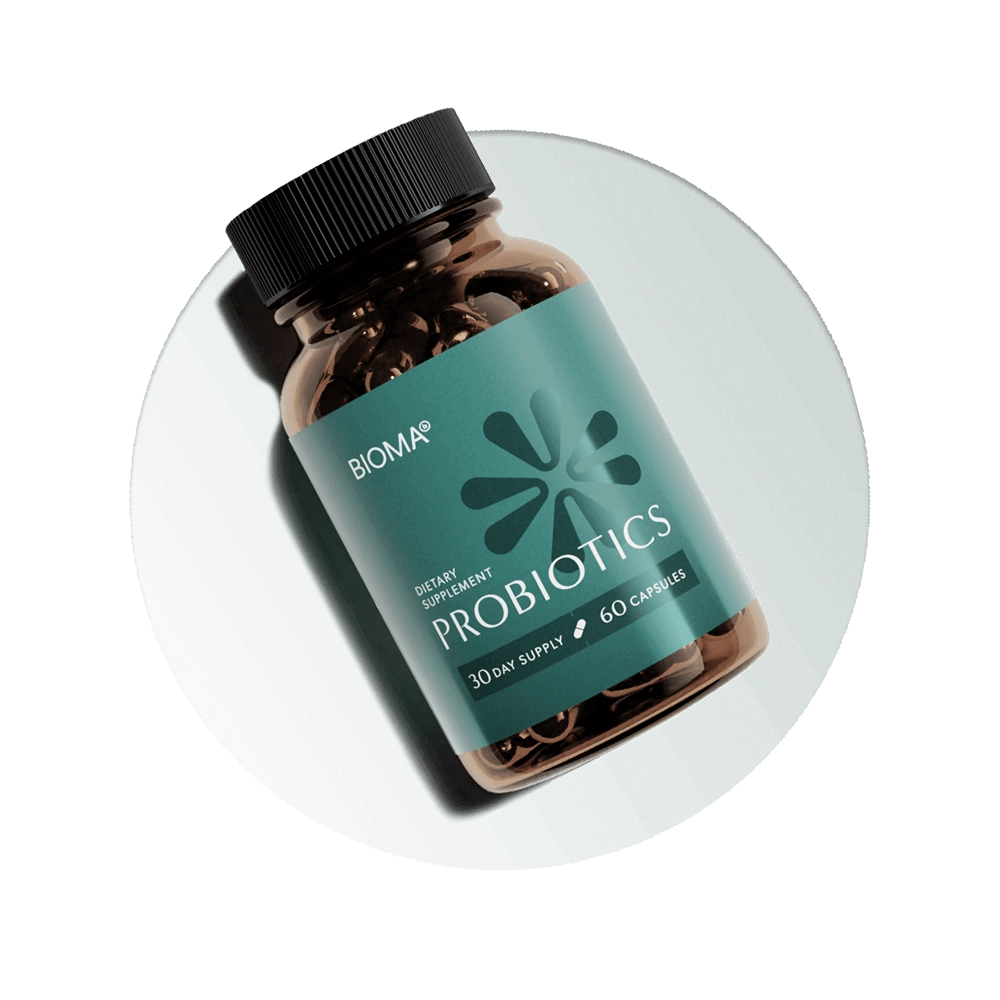
Some people also include supplements for gut health in their routine. Bioma combines probiotic strains with prebiotic XOS and tributyrin to support digestive and microbiome health. A probiotic should be considered one part of a wider gut health routine rather than a solution for the effects of prolonged sitting.
If your workday currently involves a chair, very little movement, low fiber meals, and minimal water, adding a supplement while leaving everything else unchanged misses several opportunities that have stronger practical evidence behind them.

Your 9 to 5 Gut Friendly Desk Checklist
At the end of your next workday, see how many of these you can check off:
How Gut-Friendly Was Your Workday?
Check what you managed to do today. This is not about getting a perfect score. It is a quick way to see whether your workday included enough movement, hydration, fiber, and basic gut-supporting habits.
The Bottom Line
Sitting all day can contribute to a lifestyle pattern associated with constipation and poorer metabolic health. Evidence also suggests that movement and the gut microbiome are connected, although scientists still have much to learn about the direct effects of sedentary behavior on microbial communities.
The easiest place to start is movement. Stand up more often, walk after lunch, break long desk sessions into smaller blocks, and keep regular exercise in your week. Pair that with fiber rich foods, hydration, sleep, and appropriate gut support if you choose to use it.
Your gut does not need a complicated office wellness protocol. It needs a body that gets regular opportunities to move.
Sources
- World Health Organization. Physical Activity and Sedentary Behaviour. Read the WHO guidance
- National Institute of Diabetes and Digestive and Kidney Diseases. Treatment for Constipation. Read the NIDDK guidance
- Cui J, et al. Physical Activity and Constipation: A Systematic Review of Cohort Studies. 2024. View on PubMed
- Pérez-Prieto I, et al. Physical Activity, Sedentary Behavior and Microbiome: A Systematic Review and Meta-Analysis. 2024. View on PubMed
- Gale TT, et al. The Acute Effects of Interrupting Prolonged Sitting With Regular Activity Breaks on Postprandial Glucose and Insulin in Adults. 2026. View on PubMed
- Herrmann SD, et al. 2024 Adult Compendium of Physical Activities: A Third Update of the Energy Costs of Human Activities. View on PubMed
- National Institute of Diabetes and Digestive and Kidney Diseases. Eating, Diet, & Nutrition for Constipation. Read the NIDDK nutrition guidance
- Bioma Health. Probiotics for Gut Health. Learn more about Bioma gut health support

Related articles



Less gut discomfort. More freedom to enjoy life.
Take our 1-min quiz to find out your gut type and get personalized advice and probiotics to relieve constipation, bloating, and other digestive issues.


