Buying a Women’s Probiotic? Don’t Ignore These 5 Things


Searching for the best probiotics for women returns an endless supply of rankings, and most explain very little about how the products were chosen. Probiotic research generally evaluates specific strains, doses, and outcomes rather than identifying one universally best product. Findings from one strain or formula do not automatically apply to another.
The short answer is that the right choice depends on the strain, your goal, and the quality of the product. Five checks help narrow it down, in the order they usually matter.
1. The Strain, Not Just the Word “Probiotic”
What are the best probiotics for women? The honest answer starts with a question: which strain, and for what? The National Center for Complementary and Integrative Health explains that if one kind of Lactobacillus helps with a condition, that doesn’t mean another Lactobacillus or any Bifidobacterium product would do the same, and that in most instances it is still unknown which probiotics help. Mayo Clinic agrees that not all probiotics are the same.
In practice, look for the full identification on the label, including the species and strain designation rather than only a genus such as Lactobacillus. Codes such as GR-1 or RC-14 distinguish individual strains, and probiotic evidence is often specific to those exact strains.
2. Your Goal, and What “For Women” Really Means
A “for women” label doesn’t tell you which strains are inside or what they were tested for, so it helps to ask what the product is actually meant to do. The NIH Office of Dietary Supplements notes that the effects of many commercial products haven’t been examined in research studies, which makes the label a starting point rather than proof.
If the goal is digestive comfort, Harvard Health notes that some probiotics may reduce antibiotic-associated diarrhea and are commonly used for symptoms such as gas, bloating, and constipation. However, more research is needed to determine which people and which probiotic formulations are most likely to benefit. For women choosing a probiotic primarily for digestive symptoms, this is usually the relevant evidence to examine first.
People who search for the best probiotics for women’s pH balance, or the best intimate probiotics for women, are usually asking about the vaginal microbiome, and that evidence is mixed. A Cochrane review of four randomized trials found insufficient evidence for or against probiotics as a treatment for bacterial vaginosis. A 2026 review in Infection and Immunity was more optimistic, calling probiotics an exciting option for restoring and maintaining the vaginal microbiome, with selected Lactobacillus strains showing efficacy but standardization still needed.
3. Should a Woman Take a Probiotic Daily?
Not necessarily. There is no general recommendation that every healthy woman should take a probiotic daily. NIH’s Office of Dietary Supplements notes that expert bodies do not make recommendations for or against probiotic use in healthy people, while Mayo Clinic advises discussing supplements, medications, and health conditions with a clinician before starting one.
For general gut health, fermented foods may be worth considering alongside or before supplements. Searches for the best natural probiotics for women usually lead to fermented foods such as plain Greek yogurt, kefir, and sauerkraut. In a Stanford trial of 36 healthy adults, ten weeks of fermented foods including yogurt, kefir, and kimchi increased microbial diversity and lowered 19 inflammatory proteins, while a high-fiber diet did not change diversity over the same short period. It was a small trial in healthy adults, so it does not show that fermented foods can replace probiotic supplements for specific health conditions. It does show that diet can meaningfully influence the gut microbiome and immune markers. Probiotic amounts in fermented foods can vary, and food manufacturers are not generally required to list the dose of specific probiotic microorganisms.
Is This Women’s Probiotic Worth Considering?
Pick one product you are considering and answer five quick questions. The goal is to see whether the formula gives you enough useful information to make a more informed comparison.
4. Quality, Testing, and Label Honesty
Star ratings reflect customer experience, not laboratory testing, so a top-rated women’s probiotic can still be the wrong product for your goal. Harvard Health notes that probiotics sold as dietary supplements are regulated differently from drugs and raises concerns about product quality, including whether some products contain the microorganisms stated on the label.
On the label, the Office of Dietary Supplements advises looking for the number of CFU expected through the end of the product’s shelf life rather than only at the time of manufacture. It adds that higher CFU counts are not necessarily more effective, and that the weight on a Supplement Facts panel can include both live and dead cells.
Third-party verification can add reassurance. USP verification assesses whether a supplement contains the ingredients listed on the label in the declared amounts, meets limits for specified contaminants, is manufactured according to quality standards, and continues to meet those standards through testing. It verifies product quality, not clinical effectiveness. Those quality details are more informative than the brand name alone, especially because many online roundups do not explain how products were ranked.
5. Extras in the Formula, and Who Should Be Careful
Prebiotics are complex carbohydrates that microorganisms in the gut use as fuel, and synbiotics are products containing both prebiotics and probiotics, according to the Office of Dietary Supplements. Some women’s formulas pair probiotics with prebiotics or add ingredients such as cranberry or other botanicals. It’s reasonable to ask whether the combination has been studied together or whether each ingredient simply sounds helpful.
Safety also matters. Probiotics have been linked to serious infections in some cases, most involving severely ill or immunocompromised people, and Mayo Clinic says they may not be recommended for people with immune system problems or intestinal damage. If that applies to you, or if you take medication or are pregnant, ask a health care provider before starting.
If Your Goal Is Vaginal Health
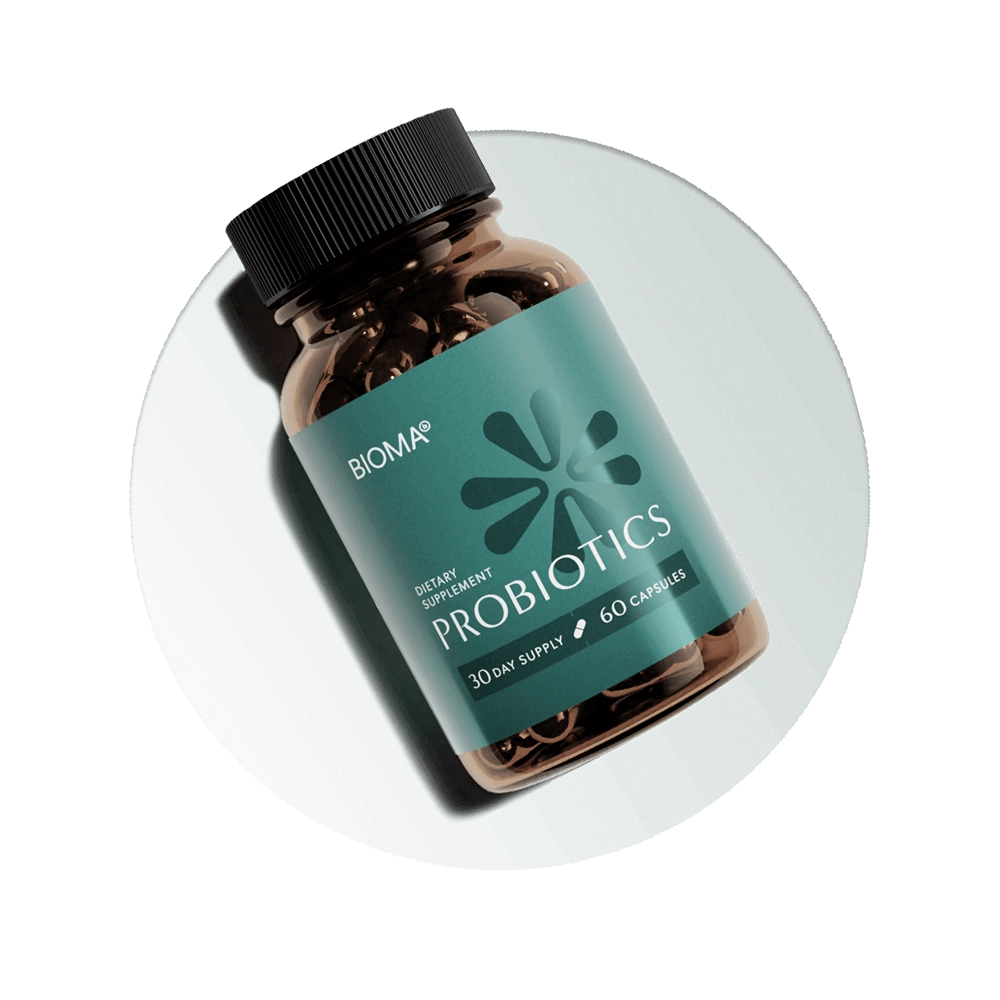
Some women looking at vaginal probiotics also compare formulas such as Bioma’s. Its current Feminine Health Synbiotic lists a 15-billion-CFU FeminCore™ blend containing Lactobacillus acidophilus La-14®, Lactococcus lactis Ll-23™, Lacticaseibacillus rhamnosus HN001™, Bifidobacterium lactis Bb-18™, Lactobacillus gasseri Lg-36™, and Bifidobacterium longum Bl-05™. It also contains cranberry whole fruit powder, tributyrin, and fructooligosaccharides (FOS). Because formulations can change, confirm the strain list, CFU count, serving size, and directions on the package you receive. Research on probiotics as a category does not establish that this specific formula will prevent or treat bacterial vaginosis, yeast infections, or urinary tract infections. The current directions are two capsules daily with water before breakfast. People with underlying health conditions, a weakened immune system, or concerns about supplement–medication interactions should discuss probiotic use with a healthcare professional.
A Simple Way to Decide
Before you buy, run through five questions:
- Strain: does the label give the species and a specific strain designation?
- Goal: is the product aimed at what you want, and is there evidence for that goal?
- Need: would food or a conversation with a doctor come first?
- Quality: does it state CFU expected through the end of shelf life, and is there credible third-party quality verification?
- Extras and safety: has the combination been studied, and are you someone who should ask first?
A probiotic supplement can be one part of a broader routine, but new or persistent symptoms should be medically evaluated rather than managed with supplements alone.
Sources
- NCCIH. Probiotics: Usefulness and Safety. https://www.nccih.nih.gov/health/probiotics-usefulness-and-safety
- NIH Office of Dietary Supplements. Probiotics: Fact Sheet for Health Professionals. https://ods.od.nih.gov/factsheets/Probiotics-HealthProfessional/
- Mayo Clinic. Probiotics may have health benefits, but talk to your doctor first. https://newsnetwork.mayoclinic.org/discussion/tuesday-q-a-probiotics-may-have-health-benefits-but-talk-to-your-doctor-first/
- Harvard Health. Should you take probiotics? (February 2022). https://www.health.harvard.edu/staying-healthy/should-you-take-probiotics
- Cochrane. Probiotics for the treatment of bacterial vaginosis. https://www.cochrane.org/evidence/CD006289_probiotics-treatment-bacterial-vaginosis
- Infection and Immunity. The role of probiotics in restoring and maintaining vaginal microbiome health: a review (2026). https://pmc.ncbi.nlm.nih.gov/articles/PMC13460080/
- Stanford Medicine. Fermented-food diet increases microbiome diversity, decreases inflammation (2021). https://med.stanford.edu/news/all-news/2021/07/fermented-food-diet-increases-microbiome-diversity-lowers-inflammation.html
- USP. Dietary Supplements Verification Program. https://www.usp.org/verification-services/dietary-supplements-verification-program
Related articles


Less gut discomfort. More freedom to enjoy life.
Take our 1-min quiz to find out your gut type and get personalized advice and probiotics to relieve constipation, bloating, and other digestive issues.


