Is Gutmaxxing Actually Good for Your Gut?

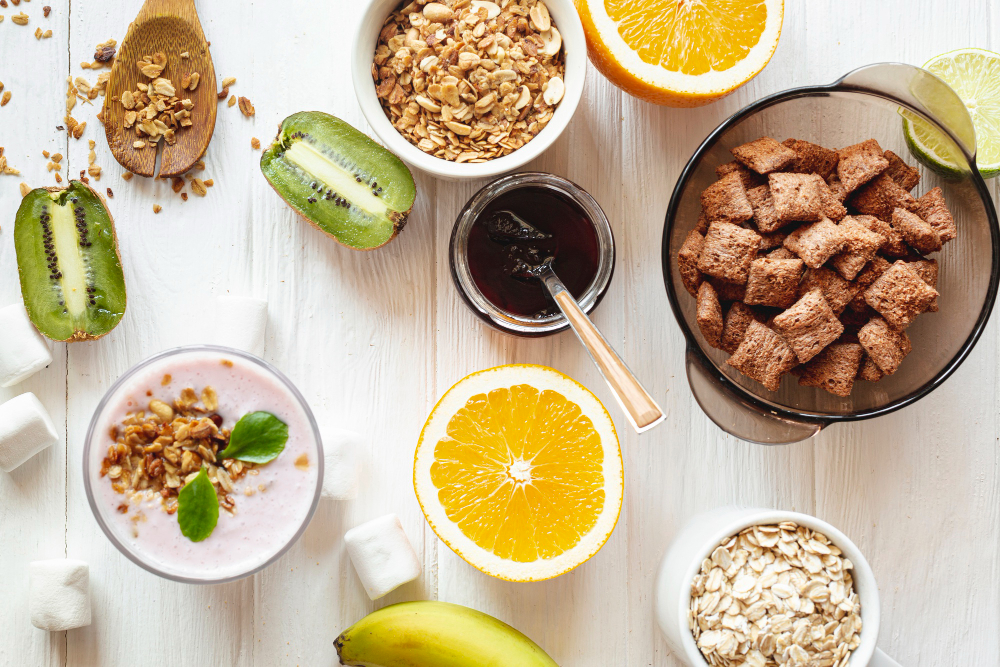
A morning fiber drink, a jar of kimchi, a checklist of thirty plants a week, a prebiotic soda where the regular one used to be: if your feed has been full of routines like these, you have already met gutmaxxing. The premise is simple: if some gut care helps, maximizing it must help more.
The honest answer to whether it works is partly. Some of what gets bundled under the trend rests on solid nutrition science, while other claims run well ahead of the evidence.
What Gutmaxxing Actually Is
Gutmaxxing, also written gut maxxing, is a social media term rather than a medical one. The “-maxxing” suffix comes from online slang for trying to optimize or maximize a particular trait. In this case, the focus is gut health and, often, the gut microbiome — the community of bacteria and other microorganisms living in the digestive tract. No clinical protocol stands behind it. In practice it usually means eating far more fiber (sometimes called fibermaxxing), adding fermented foods, buying prebiotic drinks and snacks, and taking supplements. Like many gut health trends, it mixes well-supported habits with marketing.
The Parts of Gutmaxxing That Hold Up
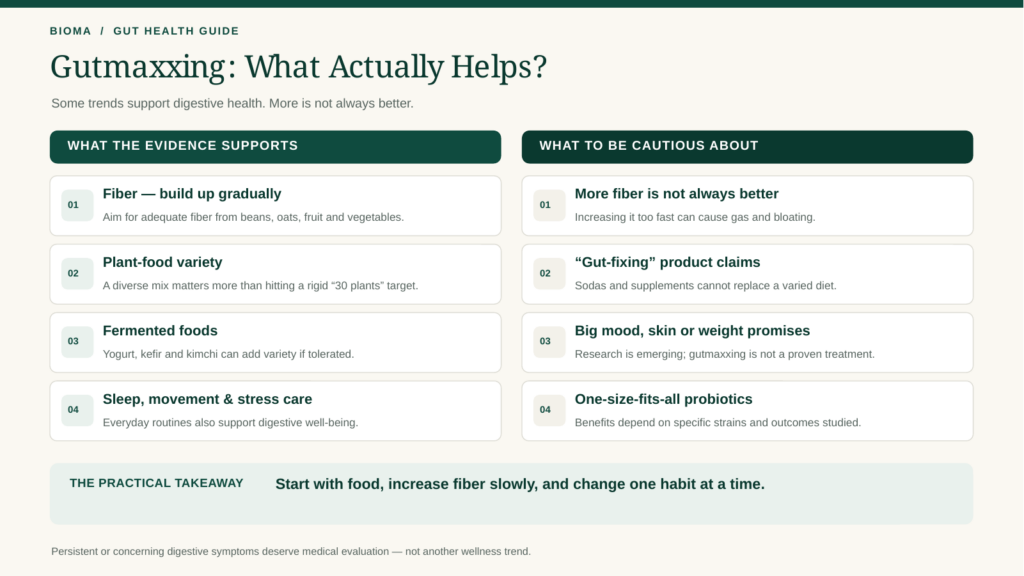
If you want to know how to improve gut health in ways research supports, start with fiber. Adults are generally advised to aim for 25 to 38 grams a day, depending on age and sex, and most people get about half that. Gut bacteria ferment certain types of fiber and produce short-chain fatty acids, compounds that play a role in maintaining the health of the colon.
Variety comes next. Observational data behind the popular ‘30 plants a week’ idea found greater gut microbial diversity among people who reported eating 30 or more types of plant foods per week than among those eating fewer than 10. That does not make 30 a biological threshold, however: the broader takeaway is that dietary variety appears to matter more than hitting one exact number. Fermented foods add a third layer: in a Stanford trial of 36 healthy adults, ten weeks of yogurt, kefir, kimchi, and similar foods increased microbial diversity and lowered inflammatory proteins, while a high-fiber diet did not change diversity over the same short period.
Sleep, movement, and stress also belong in the bigger picture of digestive health. Adults aged 18 to 60 are generally advised to get at least seven hours of sleep, while regular physical activity can support normal bowel function. Stress matters for a different reason: communication between the gut and brain means periods of high stress can coincide with changes in digestive symptoms.
What Are Common Misconceptions About Gut Health Trends?
Three come up again and again.
- More Is Not Automatically Better
Raising fiber too quickly tends to cause gas and bloating. People with irritable bowel syndrome are advised to add fiber slowly, by 2 to 3 grams a day, because too much at once can trigger symptoms, and a dietitian can help if fermentable carbohydrates known as FODMAPs are a trigger.
- Products Don’t Replace Food
Prebiotic sodas and fiber-enriched snacks can contribute fiber, but they are not nutritionally equivalent to foods such as beans, oats, fruit, and vegetables, which provide a broader mix of nutrients and plant compounds. Supplements and fortified products can have a place in a diet, but they do not make dietary variety unnecessary.
- The Loudest Voice Isn’t the Most Qualified
Social-media popularity is not a measure of scientific credibility, and commercial relationships can shape how products are presented online. Health claims are better judged by the quality of the supporting evidence than by the size of the account promoting them.
Can Gutmaxxing Help With Mood, Skin, Hair, or Weight?
Claims stretch furthest when gut health is linked to mood. Research into the gut–brain axis — the communication network connecting the digestive and nervous systems — has prompted studies of probiotics for depression and anxiety. A 2025 meta-analysis found lower depression and anxiety symptom scores among participants receiving probiotics, but the evidence had important limitations, including substantial variation between studies and risk of bias. The estimated effects also became smaller when higher-risk trials were excluded. These findings are interesting, but they do not make a gut-health routine a treatment for depression or anxiety, and probiotics should not replace established mental health care.
Claims about clearer skin and healthier hair also need more restraint. Research on the gut–skin axis has produced some promising findings, particularly in conditions such as atopic dermatitis, but results vary by condition and intervention and larger trials are still needed. Evidence connecting changes in the gut microbiome with hair loss is thinner still; current literature is dominated by associations and early-stage research rather than evidence that changing the gut microbiome reliably improves hair growth.
Bad breath is another symptom often pulled into gut-health content, even though its most common causes are in the mouth, including plaque, dry mouth, and gum disease. Brushing, flossing, cleaning the tongue, and seeing a dentist when the problem persists are therefore more relevant than trying to ‘fix the gut.’ Weight claims deserve similar caution. A fiber-rich, varied diet can form part of a balanced eating pattern, but neither gutmaxxing nor a probiotic supplement should be presented as a stand-alone weight-loss strategy.
Are You Gutmaxxing Smart or Just Doing More?
Answer five quick questions to see whether your routine is built around solid gut-health habits or starting to become more complicated than it needs to be.
How to Improve Gut Health After Antibiotics
Antibiotics are sometimes necessary and can temporarily disrupt the gut microbiome, which is why so many people ask how to improve gut health after antibiotics. Probiotics are less predictable. NCCIH notes some evidence for probiotics in antibiotic-associated diarrhea but stresses that effects depend on the strain, so results for one product don’t apply to another. If diarrhea develops during or after a course of antibiotics, particularly if it is severe or persistent, speak with a healthcare professional rather than choosing a probiotic based only on a generic ‘gut health’ claim.
Does Gut Health Advice Differ for Women and Men?
For how to improve gut health in women, one distinction is hormonal. The gut microbiome may also interact with estrogen metabolism. The term estrobolome refers to a collection of gut microbial genes whose enzymes can metabolize estrogens, including by helping deconjugate estrogens in the intestine so that some can be reabsorbed into circulation. Research has also identified differences in gut microbial composition across the menopausal transition, although studies have not established one ideal microbiome profile or clear cause-and-effect relationships. Menopause is a normal life stage, not something a wellness trend needs to ‘fix,’ and the same fundamentals — dietary fiber, plant variety, movement, and adequate sleep — remain relevant. For men, the core habits discussed in this article are broadly similar, while individual needs still vary with age, diet, symptoms, and medical history.
Start With the Habits, Then Consider Supplements
A practical approach is to change one thing at a time. You might start by adding another fiber-rich food you tolerate well, increase fiber gradually while drinking enough fluids, and then build more variety into your plant foods. Fermented foods can be added if you enjoy and tolerate them; there is no requirement to fit every gut-health trend into one routine.
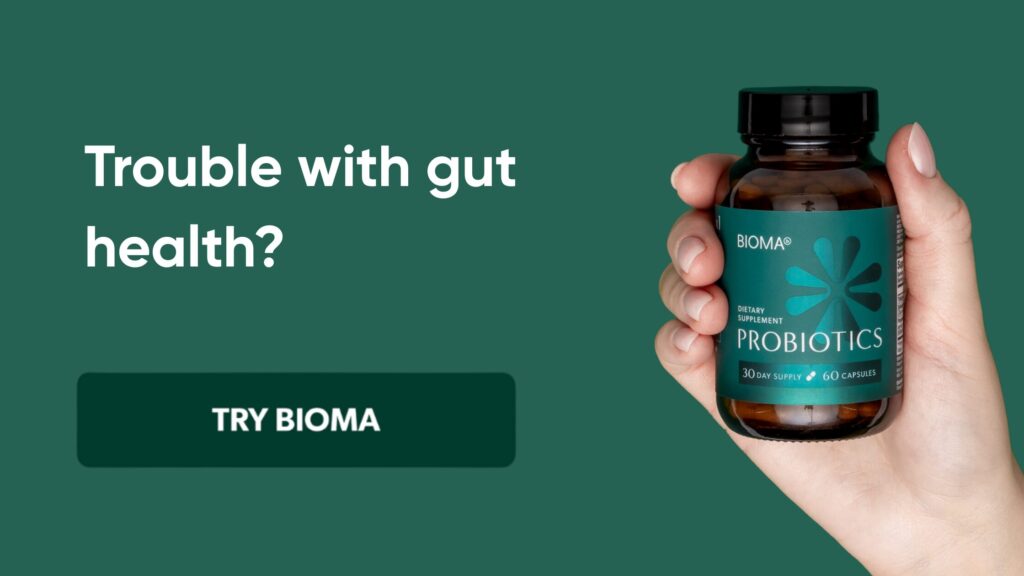
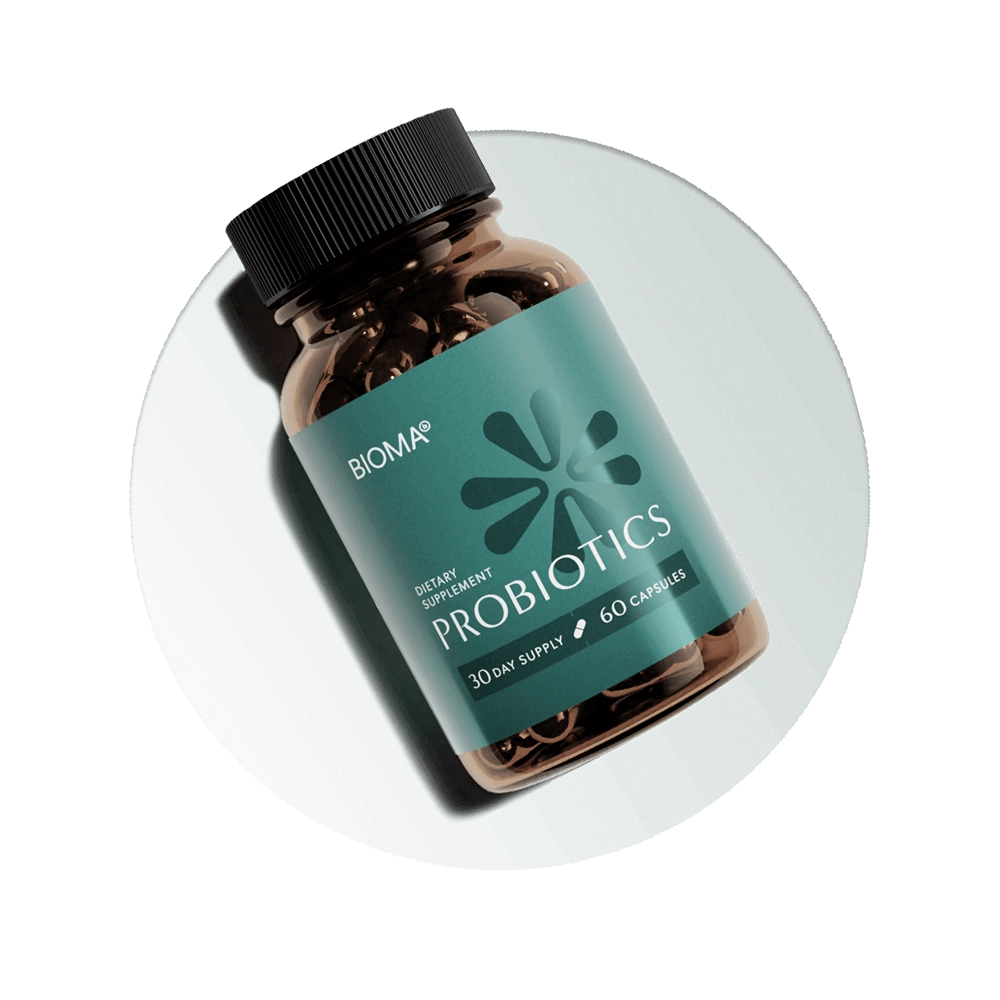
Once those basics are in place, some people also consider gut health supplements as part of their routine. NCCIH notes that although probiotics have been studied for many health purposes, in most cases researchers still do not know which specific probiotics are helpful, how much is needed, or who is most likely to benefit. Effects can differ substantially between probiotic products and strains. Bioma Probiotics contains three Bifidobacterium strains: B. breve, B. longum, and B. lactis. It also contains xylooligosaccharides (XOS), a prebiotic ingredient, and tributyrin, a butyrate-releasing compound. Research on probiotics as a category or on individual ingredients does not establish that this particular formula will produce any of the benefits discussed in this article. The directions are two tablets daily with water, and the formula is vegan. People with underlying health conditions, a weakened immune system, or concerns about supplement–medication interactions should discuss probiotic use with a healthcare professional.
Blood in the stool, unintentional weight loss, persistent vomiting, or digestive symptoms that keep returning deserve medical evaluation rather than another layer of gutmaxxing.
Sources
- ScienceAlert (AFP). The New Gut Health Obsession Comes With a Catch, Experts Warn. April 7, 2026. https://www.sciencealert.com/the-new-gut-health-obsession-comes-with-a-catch-experts-warn
- Dartmouth Health. How Much Fiber Do You Need? https://www.dartmouth-health.org/articles/how-much-fiber-do-you-need
- Microsetta Initiative (UC San Diego). 30 Plants Per Week. https://microsetta.ucsd.edu/30-plants-per-week/
- Stanford Medicine. Fermented-food diet increases microbiome diversity, decreases inflammation (2021). https://med.stanford.edu/news/all-news/2021/07/fermented-food-diet-increases-microbiome-diversity-lowers-inflammation.html
- CDC. Sleep recommendations for adults. https://www.cdc.gov/sleep/about/index.html
- NIDDK. Eating, Diet, & Nutrition for Irritable Bowel Syndrome. https://www.niddk.nih.gov/health-information/digestive-diseases/irritable-bowel-syndrome/eating-diet-nutrition
- Nutrition Reviews. Meta-analysis of prebiotics and probiotics for symptoms of depression and anxiety. https://pmc.ncbi.nlm.nih.gov/articles/PMC12166186/
- Microorganisms (MDPI). Systematic review of randomized trials on the gut-skin axis and skin conditions. https://www.mdpi.com/2076-2607/14/1/63
- Journal of Clinical and Aesthetic Dermatology. Review of gut and skin microbiome associations in alopecia. https://jcadonline.com/gut-skin-microbiome-alopecia-associations/
- Mayo Clinic. Bad Breath: Symptoms and Causes. https://www.mayoclinic.org/diseases-conditions/bad-breath/symptoms-causes/syc-20350922
- NCCIH. Probiotics: Usefulness and Safety. https://www.nccih.nih.gov/health/probiotics-usefulness-and-safety
Related articles
Less gut discomfort. More freedom to enjoy life.
Take our 1-min quiz to find out your gut type and get personalized advice and probiotics to relieve constipation, bloating, and other digestive issues.


