Why Women Gain Weight Faster After 40


You haven’t changed your diet. You’re still moving. Yet the scale keeps climbing – and the weight seems to settle in places it never did before. If this sounds familiar, you’re not imagining it. After 40, a cascade of hormonal, metabolic, and gut changes conspires to make weight gain almost inevitable for many women. Here’s the science behind it, and what you can actually do.
The Hormonal Domino Effect
Most conversations about midlife weight gain start and end with “slower metabolism.” But that framing misses the root cause. The real story begins with estrogen – a hormone that does far more than regulate your reproductive cycle.
Estrogen plays a central role in fat distribution and insulin sensitivity. When levels begin their gradual decline in the mid-30s and accelerate through perimenopause, the body’s metabolic thermostat effectively malfunctions. Insulin becomes more aggressive, pushing energy into storage – particularly around the midsection – rather than allowing it to be burned for fuel.
At the same time, cortisol (the stress hormone) behaves differently without estrogen’s moderating effect. Even ordinary daily stressors can keep cortisol elevated for longer than they used to. Research shows that women over 40 with chronically elevated cortisol store significantly more visceral fat compared to women with balanced cortisol levels, even when caloric intake is identical. This cascade – what endocrinologists sometimes call the insulin-cortisol-estrogen axis – isn’t a malfunction. It’s your body adapting to a new hormonal reality.
Fat Redistribution: From Hips to Belly
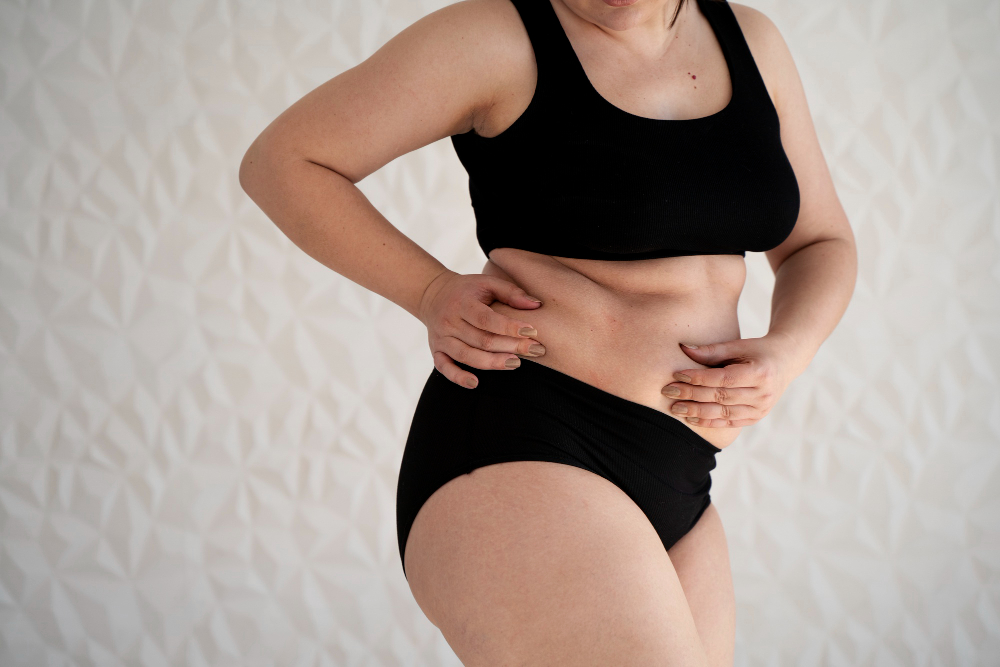
Before 40, estrogen typically directs fat storage to the hips, thighs, and buttocks. As estrogen declines, fat storage shifts to the abdomen. This isn’t just a cosmetic concern. Abdominal visceral fat – the kind that accumulates around internal organs – is metabolically active and significantly increases the risk of cardiovascular disease and type 2 diabetes. According to data published in the Journal of Clinical Endocrinology & Metabolism (2023), visceral fat can increase from 5–8% of total body weight at age 40 to 10–15% by the time of full menopause.
Progesterone also declines during this period. Lower progesterone levels are associated with water retention and bloating, which can make the changes on the scale feel even more dramatic than they are in terms of actual fat gain.
Muscle Loss: The Silent Metabolic Thief
Muscle is metabolically expensive tissue, it burns calories even while you’re doing nothing. From midlife onward, women lose roughly 1–2% of muscle mass per year, a process called sarcopenia. This decline reduces the basal metabolic rate, meaning your body requires fewer calories at rest than it did a decade ago.
The uncomfortable truth: if you eat and move exactly as you did at 32, you’ll still gain weight at 42 -because your body now simply needs fewer calories to maintain basic functions. And with estrogen loss simultaneously reducing insulin sensitivity, fat accumulation accelerates further.
The Gut Microbiome Connection
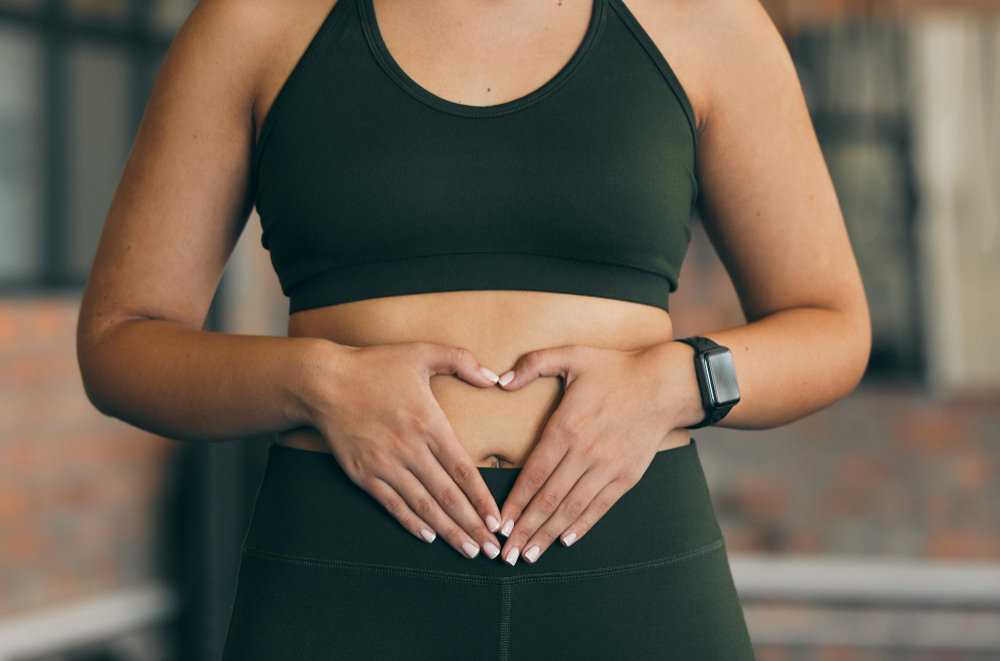
One of the most underappreciated drivers of midlife weight gain is what happens inside your gut. The microbiome doesn’t just influence digestion – it regulates estrogen metabolism, appetite hormones, inflammation, and fat storage.
When estrogen declines, the composition of gut bacteria changes with it. Postmenopausal women consistently show lower gut microbial diversity compared to premenopausal women, with reductions in beneficial species like Lactobacillus and Bifidobacterium. This imbalance alters the way the body processes estrogen, stores fat, and responds to food — creating a feedback loop that compounds hormonal weight gain.
A 2025 review in Therapeutic Advances in Endocrinology and Metabolism specifically identified the estrobolome – a collection of bacterial genes responsible for metabolizing estrogen – as a key link between gut health and the metabolic changes of menopause. Supporting the microbiome, the authors concluded, may be one of the most promising approaches for managing menopause-related weight gain.
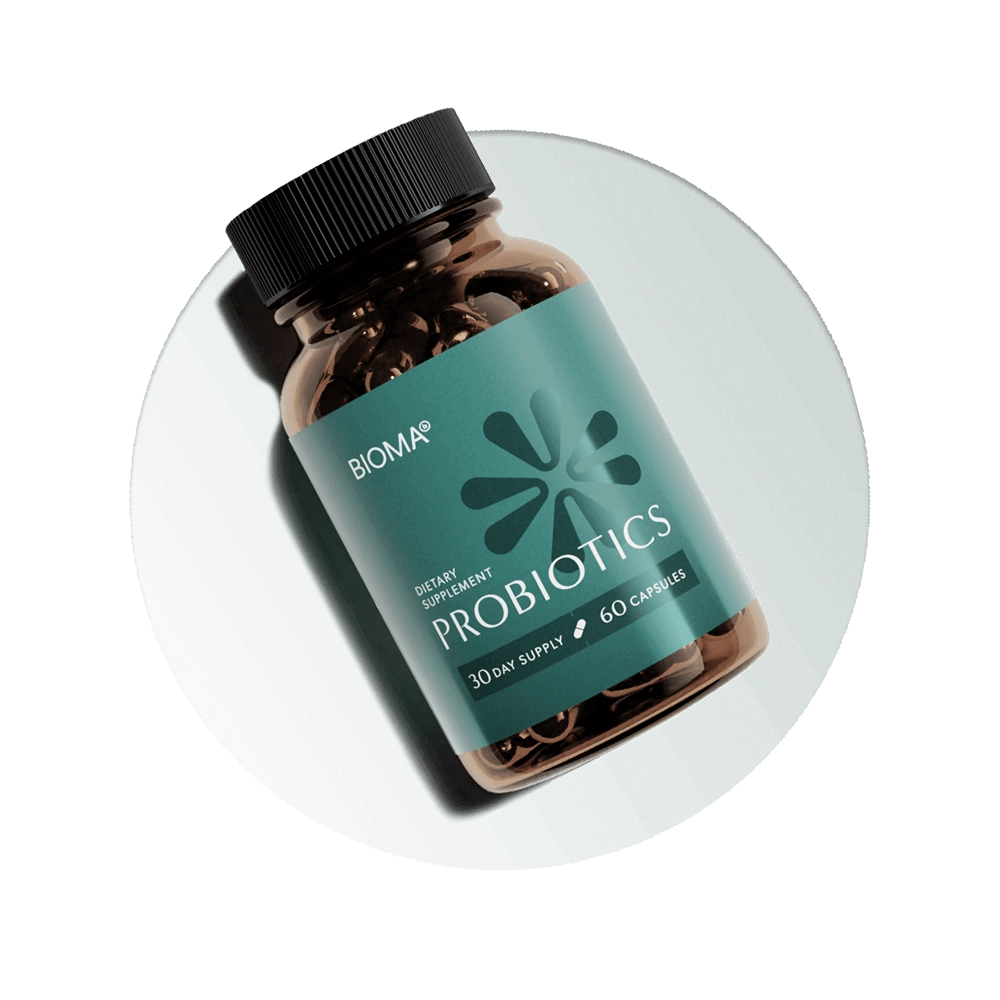
This is where targeted probiotic support becomes relevant. Bioma’s Menopause Support Probiotics are formulated as a synbiotic – combining clinically studied probiotic strains including Bifidobacterium BB536 with prebiotic fiber and phytoestrogens – specifically designed to support gut-hormone balance during the menopausal transition. It’s not a quick fix, but as part of a consistent routine, it addresses one of the underlying biological mechanisms driving weight gain after 40.

Sleep, Stress, and Hunger Hormones
Two hormones most people have never heard of – leptin and ghrelin – play a surprisingly large role in midlife weight gain. Leptin signals fullness; ghrelin signals hunger. When estrogen drops, leptin sensitivity decreases and ghrelin rises, making you feel hungrier and less satisfied after meals — even if you’re eating the same amount as before.
Sleep makes this worse. Hot flashes and night sweats fragment sleep quality, and poor sleep raises ghrelin further while lowering leptin. This hormonal combination reliably drives overeating — not because of weak willpower, but because the hunger signals themselves are amplified. Chronic poor sleep also keeps cortisol elevated, which drives further abdominal fat storage.
What Actually Works
Strength training is the most impactful single change women over 40 can make. Resistance exercise 2–3 times per week counteracts muscle loss, preserves metabolic rate, and improves insulin sensitivity. The fear of becoming “bulky” is a myth – women’s testosterone levels make significant muscle hypertrophy very difficult without pharmaceutical intervention.
More protein, less processed carbs. Protein supports muscle synthesis, reduces appetite, and stabilizes blood sugar. Fiber-rich whole foods feed beneficial gut bacteria and prevent the insulin spikes that drive abdominal fat storage.
Sleep quality matters more than most people realize. Consistent schedules, a cool bedroom, and managing night sweats – whether through lifestyle, supplementation, or medical support – directly shift hunger hormones in your favor.
Support your gut. Probiotic and prebiotic supplementation has shown meaningful results in improving metabolic markers and supporting estrogen metabolism during menopause. This isn’t fringe science anymore.
Talk to your doctor about HRT. Contrary to older concerns, current research suggests hormone replacement therapy does not cause menopausal weight gain – and may actually help prevent abdominal fat accumulation for eligible women.
The Bottom Line
Weight gain after 40 is not a failure of willpower. It is the predictable outcome of a biological transition affecting your hormones, muscles, gut, sleep, and appetite regulation – all at once. The same habits that kept you lean at 30 are working against a fundamentally different internal environment at 45.
But understanding the mechanisms gives you real leverage. You can’t stop estrogen from declining. You can build muscle that keeps your metabolism alive. You can feed the gut bacteria that help regulate the hormones estrogen once managed. You can protect the sleep that keeps hunger hormones in check.
This chapter doesn’t have to be defined by weight gain. It just requires a different approach.
Sources
- Liaquat, M., et al. (2025). The gut microbiota in menopause: Is there a role for prebiotic and probiotic solutions? Therapeutic Advances in Endocrinology and Metabolism. journals.sagepub.com
- Wu, H., et al. (2025). Gut microbiota has the potential to improve health of menopausal women by regulating estrogen. Frontiers in Endocrinology.
- Li, X., et al. (2021). Modulation of the Gut Microbiota Structure with Probiotics and Isoflavone Alleviates Metabolic Disorder in Ovariectomized Mice. NCBI / PMC8225012.
- NIH National Institute on Aging (2022). Sarcopenia and muscle loss in midlife.

Related articles


Less gut discomfort. More freedom to enjoy life.
Take our 1-min quiz to find out your gut type and get personalized advice and probiotics to relieve constipation, bloating, and other digestive issues.


