What Is “Food Noise” and Why Is Everyone Talking About It?

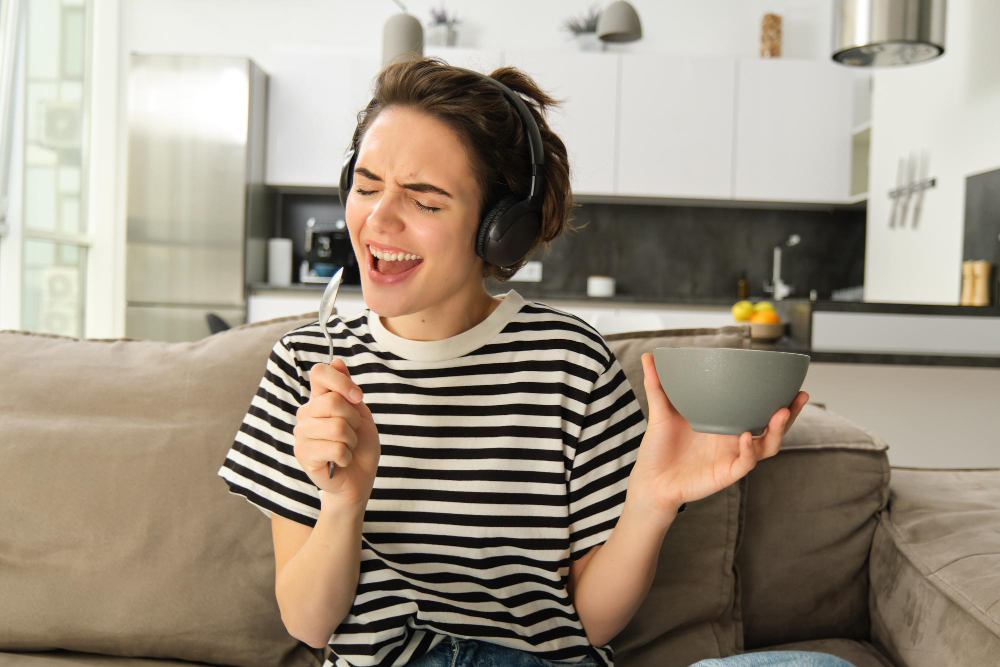
You finish lunch and, within the hour, you’re already thinking about dinner. You’re not hungry, not really, but your brain won’t let it go. What are you going to eat? Should you have something sweet? Maybe just a small snack. The thoughts circle back, uninvited, again and again throughout the day.
If that sounds familiar, you’ve experienced what is increasingly being called food noise.

So, What Exactly Is Food Noise?
Food noise is the constant, intrusive mental chatter about food: what to eat, when to eat, whether you should eat, what you ate earlier, what you’ll eat later. It’s not the same as hunger. It’s not a craving in the traditional sense. It’s more like a background hum that never fully switches off, turning food into an all-day mental preoccupation even when your body isn’t asking for fuel.
The term isn’t new, but it has exploded into mainstream conversation over the past couple of years, largely because of one unexpected catalyst: people taking GLP-1 medications like Ozempic and Wegovy started reporting that the drugs didn’t just reduce appetite. They made the food noise stop. For many, it was the first time in their lives they realized that the relentless mental focus on food wasn’t normal. It wasn’t a personality flaw. It was a biological phenomenon that could be switched off.
That revelation sent a lot of people asking: where does food noise come from in the first place?
The Biology Behind the Noise
Food noise isn’t a character flaw or a lack of discipline. It has identifiable biological roots, and they run deeper than most people expect.
The brain’s reward system, particularly the dopamine pathways, treats food as a primary survival signal. For most of human history, thinking about food constantly was adaptive. It kept people alive. The problem is that this system was never designed for an environment saturated with hyper-palatable, calorie-dense food engineered specifically to trigger reward responses.
Ultra-processed foods, high in sugar, refined carbohydrates, and industrial seed oils, light up the same dopamine circuits as addictive substances. They create a cycle of craving, consumption, and temporary relief, followed quickly by the return of the craving. The brain learns to anticipate the reward and starts generating food-related thoughts proactively, long before any real hunger signal arrives.
On top of that, two key appetite hormones, leptin and ghrelin, heavily influence how loud food noise gets. Leptin signals satiety and tells the brain “enough.” Ghrelin signals hunger and says “more.” When these hormones are dysregulated, whether through poor sleep, chronic stress, or metabolic imbalance, the internal volume gets turned up significantly.

Why Women Tend to Experience It More
Food noise does not affect everyone equally. Women, particularly during perimenopause and menopause, tend to report it more intensely, and the reasons are hormonal.
Estrogen has a direct influence on both dopamine signaling and appetite regulation. As estrogen levels decline in midlife, leptin sensitivity drops, ghrelin rises, and the brain’s reward response to food can become more pronounced. This is one reason why cravings and food preoccupation often intensify during hormonal transitions, even in women who never struggled with this before.
The gut-brain axis also plays a significant role. The gut produces roughly 90% of the body’s serotonin, a neurotransmitter that influences mood, reward, and satiety. When the gut microbiome is out of balance, serotonin production can be disrupted, which amplifies cravings and makes food noise louder.
The GLP-1 Effect and What It Revealed
The conversation around food noise accelerated dramatically when patients on GLP-1 receptor agonists began describing their experience in strikingly similar terms. The drugs work partly by mimicking a gut hormone that signals fullness to the brain, but patients consistently reported something beyond reduced appetite: a quieting of the mental noise.
People who had spent decades in a running internal negotiation with food suddenly found themselves indifferent. They could walk past a bakery without a second thought. They could leave food on their plate without it requiring conscious effort. For many, it was disorienting. They hadn’t realized how much mental energy food had been consuming.
This doesn’t mean GLP-1 medications are the answer for everyone. They carry significant side effects, are expensive, and are not appropriate for all people. But their effect on food noise made one thing clear: this is a neurobiological phenomenon, not a willpower problem.
Here’s something worth knowing, though. GLP-1 is not exclusively a pharmaceutical. It’s a hormone your body produces naturally, primarily in the gut, in response to eating. The reason GLP-1 drugs work so well is that they amplify a signal your gut is already supposed to be sending. When the gut is healthy and the microbiome is functioning well, natural GLP-1 production is more robust. When it isn’t, that signal weakens, appetite regulation suffers, and food noise gets louder.
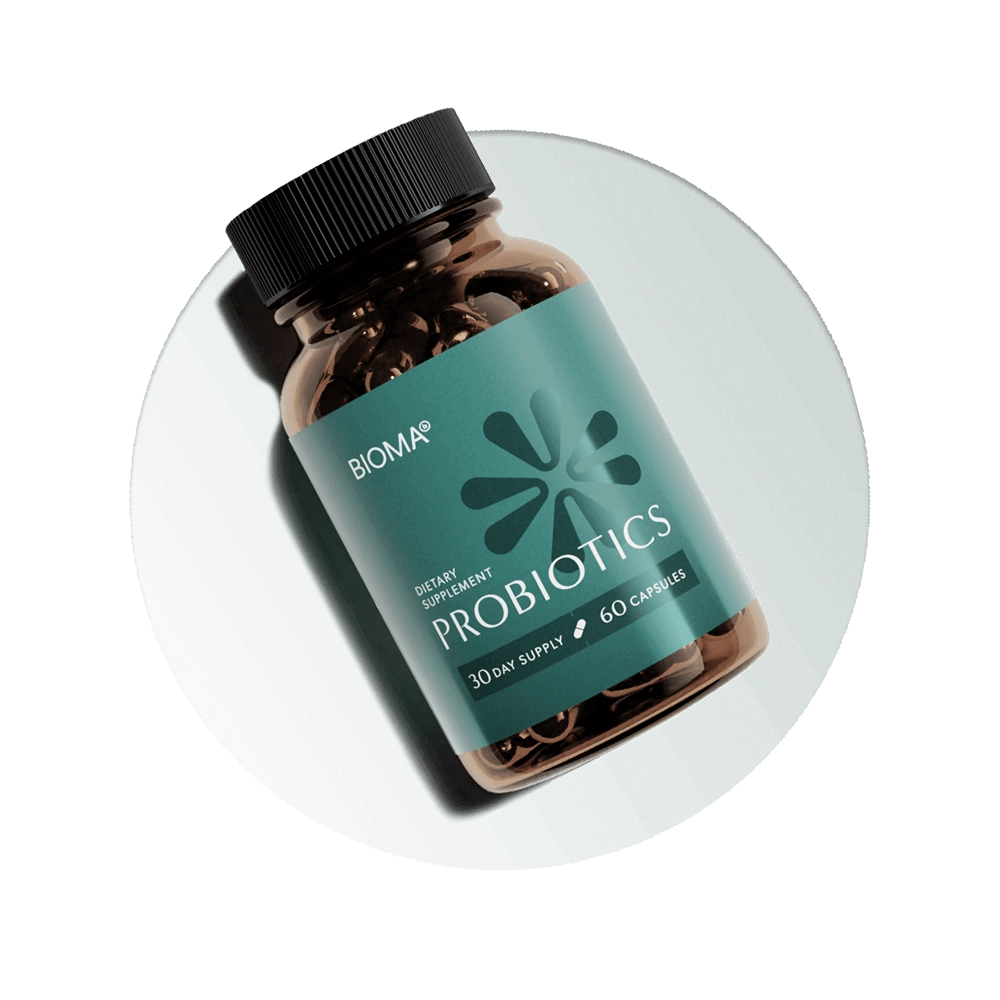
This is part of why Bioma’s GLP-1 Booster takes a different approach. Rather than replacing the hormone pharmaceutically, it works with the gut to support the body’s own GLP-1 production. Formulated with ingredients shown to stimulate natural GLP-1 secretion, including specific prebiotic fibers and postbiotic compounds, it’s designed for people who want to address the biology of food noise without a prescription. It won’t replicate the dramatic effects of a GLP-1 drug, but for many people, meaningfully quieting the background noise is exactly what they’re looking for.

What Actually Helps Quiet Food Noise
The good news is that you don’t need a prescription to meaningfully reduce food noise. Several evidence-based approaches target the underlying biology.
Stabilize blood sugar. Erratic blood sugar is one of the most reliable amplifiers of food noise. When glucose spikes and crashes, the brain interprets the drop as an emergency and generates urgent food thoughts. Eating protein and fiber at every meal, reducing refined carbohydrates, and avoiding long gaps between meals all help smooth out these fluctuations.
Prioritize sleep. Even one night of poor sleep measurably raises ghrelin and lowers leptin. Chronic sleep disruption essentially turns the volume of food noise up to maximum. Getting consistent, quality sleep is not optional if reducing food preoccupation is the goal.
Support your gut. Because the gut-brain axis plays such a direct role in appetite signaling and serotonin production, gut health is a legitimate lever for managing food noise. A diverse, fiber-rich diet and targeted probiotic support can improve the microbial environment that influences how hunger and reward signals are processed, including how well your body produces GLP-1 naturally.
Reduce ultra-processed food gradually. The dopamine cycle that ultra-processed food creates is a major driver of food noise. The less frequently these foods trigger reward pathways, the quieter the noise tends to become over time. Cold turkey rarely works; gradual reduction is more sustainable.
Manage stress. Cortisol directly stimulates appetite and food-seeking behavior. Whatever genuinely reduces your stress load, whether that is exercise, sleep, therapy, or simply time outdoors, has a measurable effect on how preoccupied the brain becomes with food.

Why This Conversation Matters
For decades, people who struggled with constant food thoughts were told, implicitly or explicitly, that the problem was their mindset, their relationship with food, or their lack of self-control. The food noise conversation is helping to dismantle that narrative.
When we understand that food preoccupation has biological drivers, including hormones, gut bacteria, sleep quality, and dopamine regulation, we stop treating it as a moral failing and start treating it as something that can actually be addressed. That shift in framing is meaningful. It changes how people relate to themselves, and it changes what kinds of solutions they look for.
Food noise is real. It has a biology. And it responds to the right interventions.
Sources
- Muhlheim, L. (2024). What Is Food Noise? Verywell Mind.
- Friedman, J.M. (2019). Leptin and the regulation of body weight. Nature Medicine.
- Farr, O.M., et al. (2016). Ghrelin and appetite regulation. Current Opinion in Endocrinology.
- Liaquat, M., et al. (2025). The gut microbiota in menopause. Therapeutic Advances in Endocrinology and Metabolism.
- Drucker, D.J. (2022). GLP-1 physiology informs the pharmacology of obesity. Nature Reviews Endocrinology.


Related articles



Less gut discomfort. More freedom to enjoy life.
Take our 1-min quiz to find out your gut type and get personalized advice and probiotics to relieve constipation, bloating, and other digestive issues.


