Nighttime Cravings Explained by Science

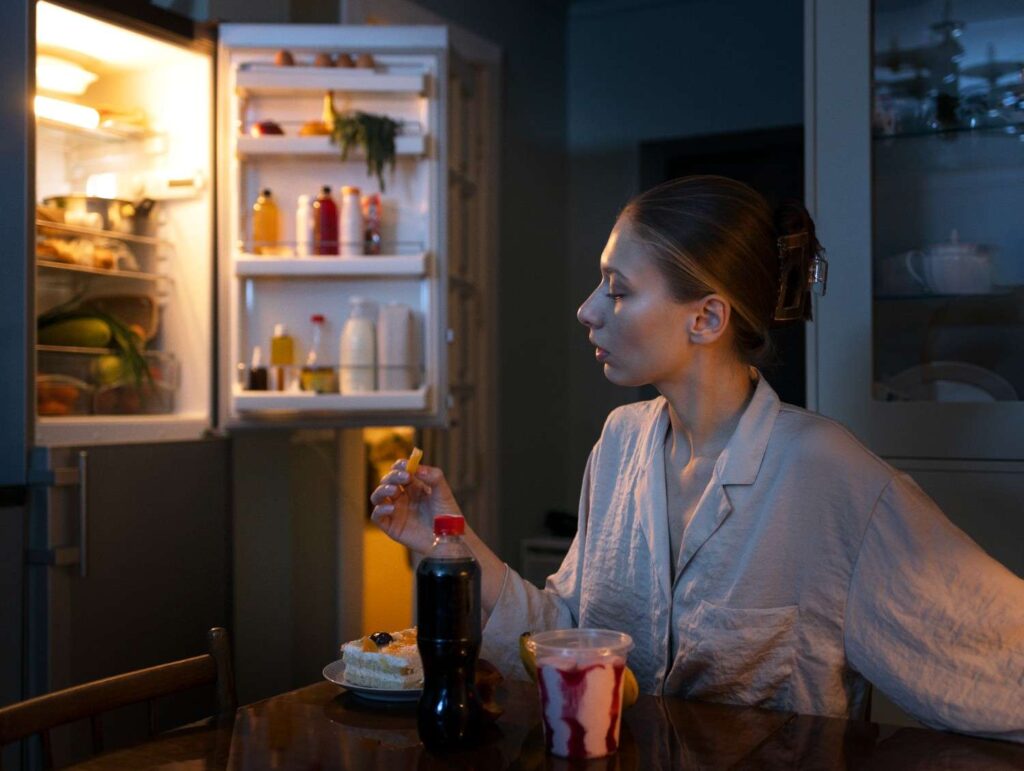
You finish dinner feeling completely satisfied. A few hours later, you’re standing in front of the fridge wondering why you suddenly want something sweet, salty, or comforting. If this sounds familiar, you’re not alone. Cravings at night are one of the most common eating challenges people experience, and they often feel far more intense than cravings during the day.
It’s easy to assume that nighttime cravings are simply a willpower problem. However, research suggests that biology, sleep, metabolism, stress, and appetite regulation all play a role in why cravings seem to show up after dark. Understanding what’s actually happening inside your body can make these experiences feel far less confusing.
What Your Body Is Doing at Night
As the day progresses, your body begins preparing for rest. This process is guided by your circadian rhythm, the internal clock that influences everything from hormone production to digestion and metabolism. During daylight hours, your body is generally better equipped to process food efficiently. As evening approaches, various physiological systems begin shifting toward recovery and repair. Digestion slows, energy expenditure changes, and hormone levels fluctuate. While this doesn’t mean you shouldn’t eat at night, it does mean that your body is operating differently than it was earlier in the day.
These natural changes help explain why eating habits often feel different in the evening. Many people notice stronger urges to snack, reduced feelings of self-control, or a tendency to seek highly rewarding foods. The experience can feel emotional, but there is often biology involved behind the scenes.

Why Midnight Cravings Happen
Midnight cravings often begin much earlier than expected. A breakfast that lacks protein, a rushed lunch, long gaps between meals, or simply not eating enough throughout the day can leave your body searching for energy by the evening. When this happens, cravings become more likely because your body is trying to compensate for what it missed earlier.
Stress can amplify this effect. After a long day of work, responsibilities, and decision-making, the brain naturally seeks activities and foods that feel rewarding. This is one reason why cravings at night often involve comfort foods rather than vegetables or lean protein.
Emotional factors can also contribute. For many people, evening hours are the first quiet moments of the day. Food can become associated with relaxation, reward, or decompression, creating patterns that repeat night after night.
The Sleep and Cravings Connection
Sleep is one of the most underestimated factors influencing appetite. Research has consistently shown that insufficient sleep affects hormones involved in hunger and fullness. When sleep is restricted, levels of ghrelin, often called the “hunger hormone,” tend to increase, while leptin, a hormone associated with satiety, may decrease. The result is a stronger drive to eat and a reduced ability to feel satisfied. This helps explain why cravings can feel nearly impossible to ignore after a few nights of poor sleep. The issue isn’t a lack of discipline. Your brain is literally responding differently to food cues.
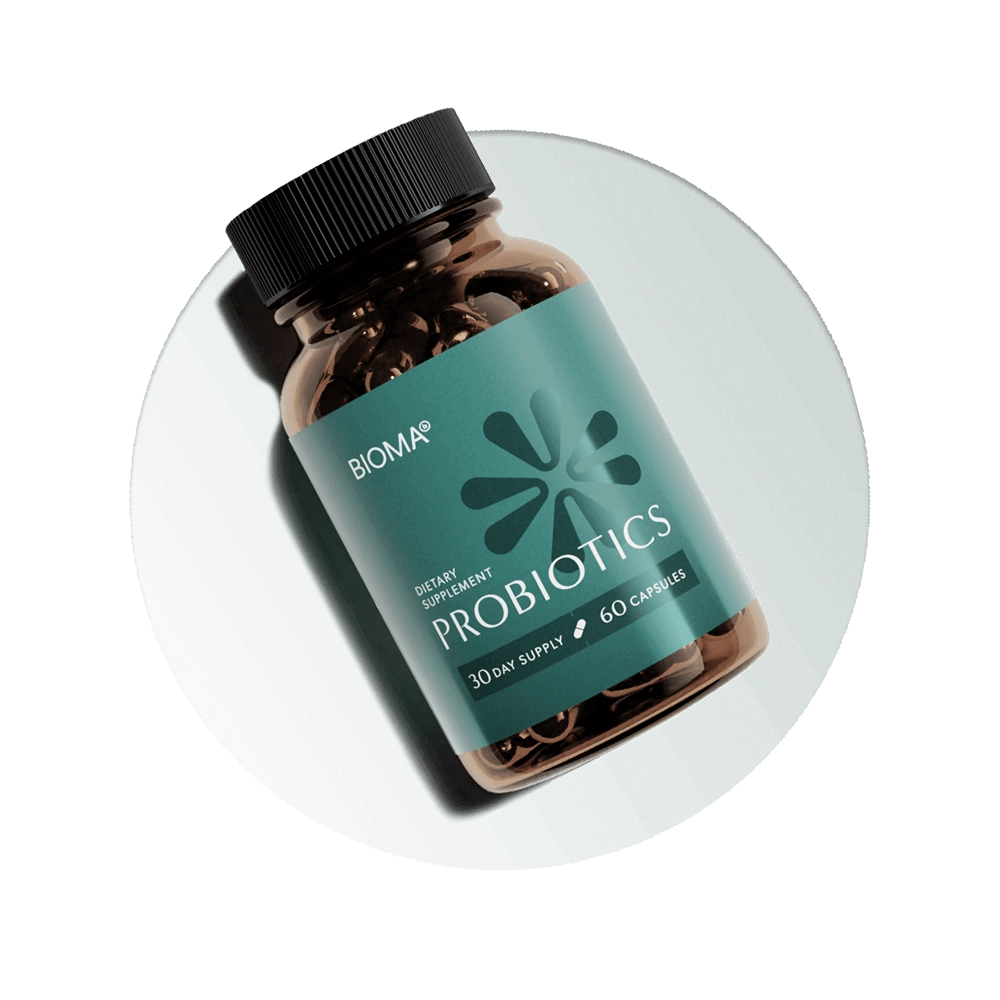
Research suggests that improving sleep quality may be one of the most overlooked strategies for managing nighttime cravings. When the body gets enough restorative sleep, appetite-regulating hormones tend to function more effectively, making it easier to maintain balanced eating habits the following day. This connection has led to growing interest in products designed to support both sleep and metabolism simultaneously. For example, Bioma Night Metabolism Probiotics combines ingredients that support restful sleep with nutrients associated with healthy nighttime metabolism, helping address two factors that are often linked to late-night hunger and cravings.
Are Nighttime Cravings a Sign Your Body Needs Something?
Many people wonder whether cravings are the body’s way of signaling a deficiency. Sometimes, cravings may reflect genuine physical needs. If you haven’t eaten enough protein, consumed too few calories, or gone long periods without food, your body may increase hunger signals to encourage you to eat.
However, cravings do not always indicate a nutrient deficiency. In many cases, they are influenced by habits, emotions, environmental cues, sleep quality, and stress levels. A craving for cookies doesn’t necessarily mean your body needs sugar, just as craving chips doesn’t automatically indicate a sodium deficiency. The most helpful approach is to look at patterns rather than individual cravings. If cravings appear consistently at the same time each night, there is often a broader lifestyle or eating pattern contributing to them.
Are Nighttime Cravings Making Your Body Store More Fat?
The simple answer is that experiencing cravings does not automatically mean your body is storing fat. Cravings are signals, not evidence that fat gain is occurring. What matters more is how those cravings affect eating behavior over time. Consistently consuming large amounts of excess calories late at night can contribute to weight gain, just as overeating at any other time of day can. However, the occasional evening snack is not automatically converted into body fat.
Research suggests that late-night eating may influence weight regulation when it becomes a regular habit, particularly when combined with poor sleep, disrupted circadian rhythms, and excess calorie intake. The relationship is complex, but it is far more nuanced than the idea that eating after a certain hour automatically causes fat gain.
How Fat Is Stored: What Most People Get Wrong
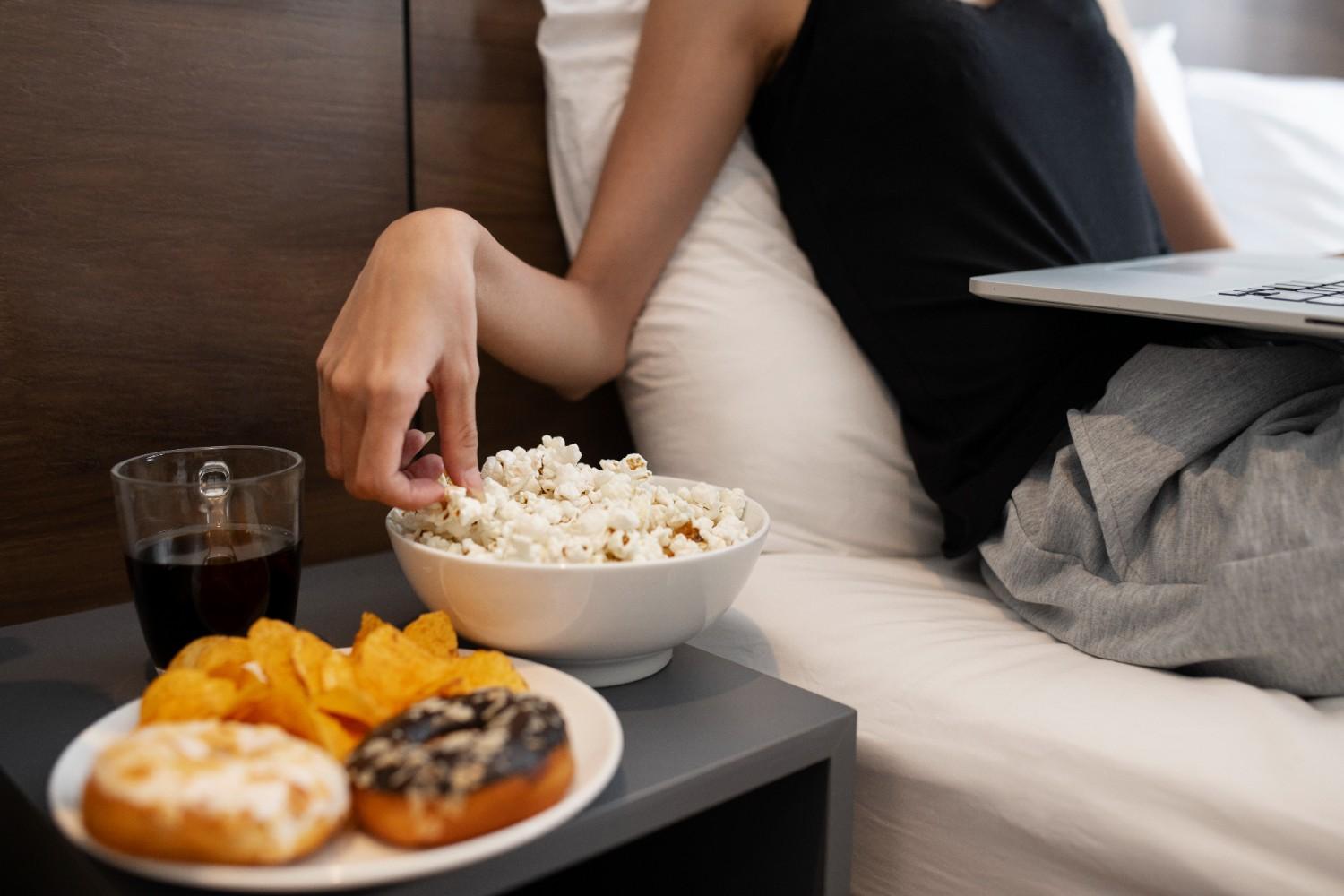
Many people imagine that food eaten at night goes directly to the stomach area and becomes belly fat. Fortunately, that is not how the body works. Fat storage is primarily driven by long-term energy balance. When energy intake consistently exceeds energy expenditure, the body stores excess energy as fat. Where that fat is stored depends on factors such as genetics, hormones, age, and overall health. This means that storing fat in the belly or stomach area is not determined by one evening snack. Instead, it develops through long-term physiological processes that occur over weeks, months, and years.
Understanding this can help reduce some of the fear surrounding nighttime eating. While frequent overeating may contribute to weight gain, a single snack before bed is unlikely to dramatically change body composition.
The Gut, GLP-1, and Appetite Signals
The gut plays a surprisingly important role in how hungry or satisfied you feel. Scientists now know that the digestive system communicates constantly with the brain through a network often called the gut-brain axis. Signals originating in the gut influence appetite, satiety, cravings, and food choices throughout the day.
One of the key hormones involved in this process is GLP-1. Produced primarily in the intestine, GLP-1 helps regulate appetite by promoting feelings of fullness after meals. It is one of the reasons some meals leave you satisfied for hours while others seem to disappear without reducing hunger at all.
This growing understanding of appetite regulation has also led to increased interest in tools that support natural GLP-1 pathways. For example, some people choose to incorporate a GLP-1 Booster into their routine as part of a broader strategy focused on appetite awareness, gut health, and long-term weight management. The goal is not to replace healthy habits, but to support the biological systems that help regulate hunger and fullness naturally.
Could Your Nighttime Cravings Be Telling You Something?
Take a quick check-in.
1. Do you often skip breakfast?
2. How many hours do you sleep most nights?
3. Do your cravings usually appear after stressful days?
4. Do you feel physically hungry when cravings hit?
What Science Says About Managing Nighttime Cravings
Research points toward a consistent theme: nighttime cravings become easier to manage when the body feels adequately nourished, rested, and supported throughout the day. Studies have repeatedly linked higher protein intake, sufficient dietary fiber, adequate sleep, and stress management with healthier appetite regulation. While no single habit eliminates cravings entirely, these factors appear to work together to support more stable hunger and fullness signals. This is one reason why quick fixes rarely work long-term. Cravings are influenced by multiple biological systems, which means meaningful improvement often comes from supporting the body as a whole rather than targeting a single symptom.
Understanding Cravings Starts With Understanding Your Body
Nighttime cravings can feel frustrating, especially when they seem to appear out of nowhere. But the science suggests they are rarely random. Sleep quality, meal patterns, stress levels, metabolism, gut health, and appetite hormones all contribute to the signals you experience.
Instead of viewing cravings as a personal failure, it may be more helpful to see them as information. They often provide clues about what your body needs, how your routine is affecting you, and where additional support may be beneficial. The better you understand those signals, the easier it becomes to respond to them in a way that supports both your health and your goals.
Sources
- Scheer, F.A.J.L., Morris, C.J., & Shea, S.A. (2013). The internal circadian clock increases hunger and appetite in the evening independent of food intake and other behaviors. Obesity.
- Spiegel, K., Tasali, E., Penev, P., & Van Cauter, E. (2004). Sleep curtailment in healthy young men is associated with decreased leptin levels and increased hunger. Annals of Internal Medicine.
- Greer, S.M., Goldstein, A.N., & Walker, M.P. (2013). The impact of sleep deprivation on food desire in the human brain. Nature Communications.
- McHill, A.W., Phillips, A.J.K., Czeisler, C.A., et al. (2017). Later circadian timing of food intake is associated with increased body fat. American Journal of Clinical Nutrition.
- Muller, P.A., Matheis, F., & Schneeberger, M. (2020). Gut hormones and the microbiota: Emerging links in appetite regulation. Nature Reviews Endocrinology.
- Holst, J.J. (2019). The physiology of glucagon-like peptide 1. Physiological Reviews.
Related articles

Less gut discomfort. More freedom to enjoy life.
Take our 1-min quiz to find out your gut type and get personalized advice and probiotics to relieve constipation, bloating, and other digestive issues.


