Why Menopause Belly Happens and What May Help

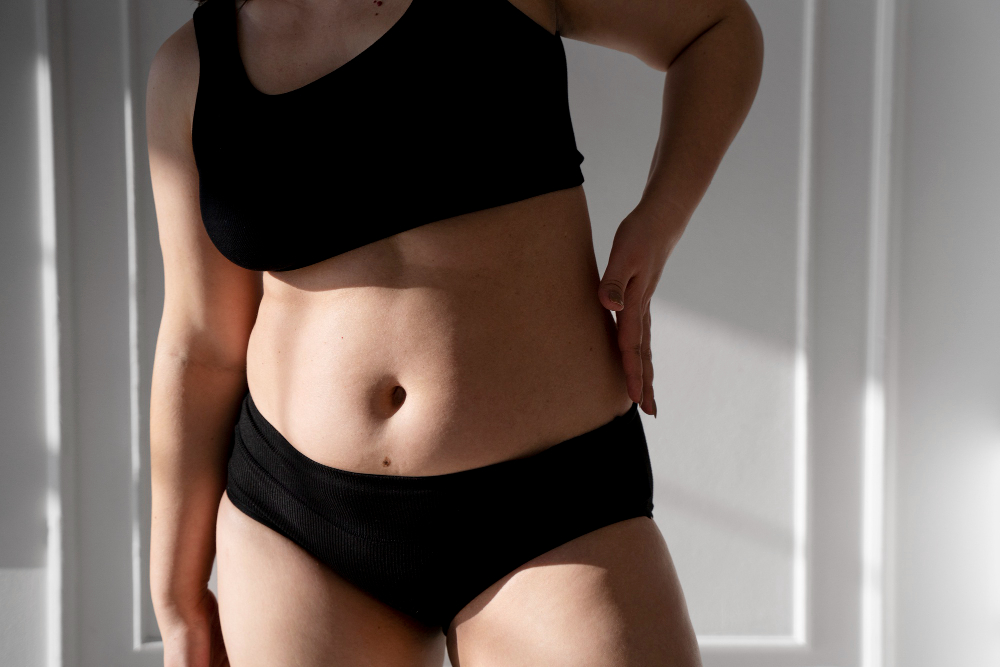
Many women describe the same pattern: the waistline changes, the stomach feels tighter by evening, and habits that once worked stop working. It is common, and it rarely has a single cause.
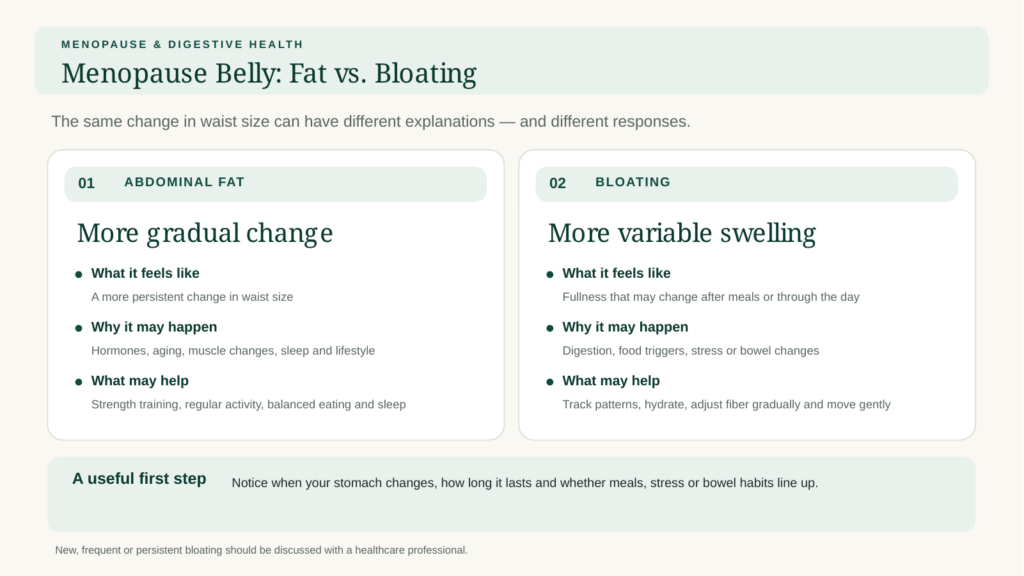
The phrase “menopause belly” bundles two different things: fat that settles around the abdomen and bloating that comes and goes. They call for different responses, so telling them apart is the first step.
What Is Menopause Belly?
Menopause belly is an everyday phrase, not a medical diagnosis. It is commonly used to describe changes in waist size, abdominal fat, or bloating that some women notice during perimenopause and after menopause. That can mean extra fat around the midsection, a stomach that feels swollen, or both.
The timing matters. Johns Hopkins Medicine notes that the most pronounced weight gain typically happens in the seven to 10 years between perimenopause and the early postmenopausal years. Changes in waist size can therefore begin during perimenopause, before periods have stopped completely, and may continue into the postmenopausal years as body composition, activity, sleep, and other factors evolve.
What Causes Menopause Belly?
Several factors overlap. Before menopause, fat is more commonly stored around the hips and thighs, while the hormonal changes of menopause are associated with a shift toward greater abdominal fat storage. Declining estrogen may also contribute to changes in metabolism and muscle maintenance, while age-related loss of muscle mass can reduce the rate at which the body uses calories.
Hormones are only part of the story. Mayo Clinic points out that hormonal changes alone don’t necessarily cause menopause belly weight gain, which is usually related to diet, lifestyle changes, genetics, and aging itself. Sleep and stress can add another layer. Sleep disruption is common during the menopause transition and can affect appetite and activity levels. Ongoing stress may also influence eating patterns and weight regulation, but it is too simplistic to treat cortisol as a single cause of menopause belly. Menopause belly fat is best understood as several changes arriving together.

Is Menopause Belly Visceral Fat?
Partly, and it is hard to tell by looking. Belly fat includes subcutaneous fat, which sits under the skin, and visceral fat, which lies deeper and wraps around internal organs. Cleveland Clinic notes that visceral fat can’t be seen or felt, and that research links too much of it to a higher risk of cardiovascular disease and diabetes.
So is menopause belly visceral fat? It can include visceral fat, but you cannot determine how much by appearance alone. Waist circumference can provide a rough indication of abdominal fat distribution. Cleveland Clinic notes that a waist measurement of 35 inches (about 89 cm) or more in women is associated with increased health risks related to excess abdominal and visceral fat. A doctor can put that number in context alongside blood pressure, blood sugar, and cholesterol.
What Should You Pay Attention to First?
Changes around the middle can reflect bloating, longer-term body composition changes, or both. Answer five quick questions to see which pattern may be most useful to track.
Why Is My Stomach So Big During Menopause?
Sometimes the answer is bloating rather than fat. If you keep asking why is my stomach so big during menopause, note when it swells: after meals, at certain times of day, or during stressful weeks. That record helps you and your doctor see whether digestion is part of the picture.
Bloating is very common at this stage. Preliminary findings from a 2024 survey of 564 women aged 44 to 73, cited by Women’s Health Concern, found that 94% reported digestive health issues during menopause. Among the participants, 77% reported bloating and 38% said their digestive symptoms first appeared with the onset of perimenopause. The fact sheet notes that falling estrogen and progesterone may influence gut motility, the gut–brain axis, and the gut microbiome, although the relationship between hormonal changes and digestive symptoms is not yet fully understood. Stress and pelvic floor changes may also contribute to constipation and bloating.
How to Get Rid of Menopause Belly: What May Help
There is no single fix, but the best-supported habits are practical ones. If you are asking how to get rid of menopause belly, begin with muscle. Johns Hopkins advises prioritizing strength training to maintain muscle mass and support metabolism, and Mayo Clinic recommends strength exercises at least twice a week alongside 150 to 300 minutes of moderate aerobic activity, such as brisk walking.
Food and sleep matter too. Mayo Clinic notes that some people may need roughly 200 fewer calories per day in their 50s than they did in their 30s and 40s to maintain the same weight, although individual energy needs vary. Better sleep supports the rest. Hormone therapy is not a weight-loss treatment, but Mayo Clinic notes that it may indirectly support weight management in some women by improving menopause symptoms such as poor sleep. Whether it is appropriate depends on individual symptoms, risks, and medical history.
For bloating, Women’s Health Concern suggests eating regularly and chewing well, drinking enough water, adjusting fiber with a dietitian’s help, limiting personal triggers such as fatty foods, caffeine, alcohol, and spicy meals, and including fermented foods. Gentle exercise such as walking or yoga and stress management also feature in that advice.
Does Menopause Belly Go Away?
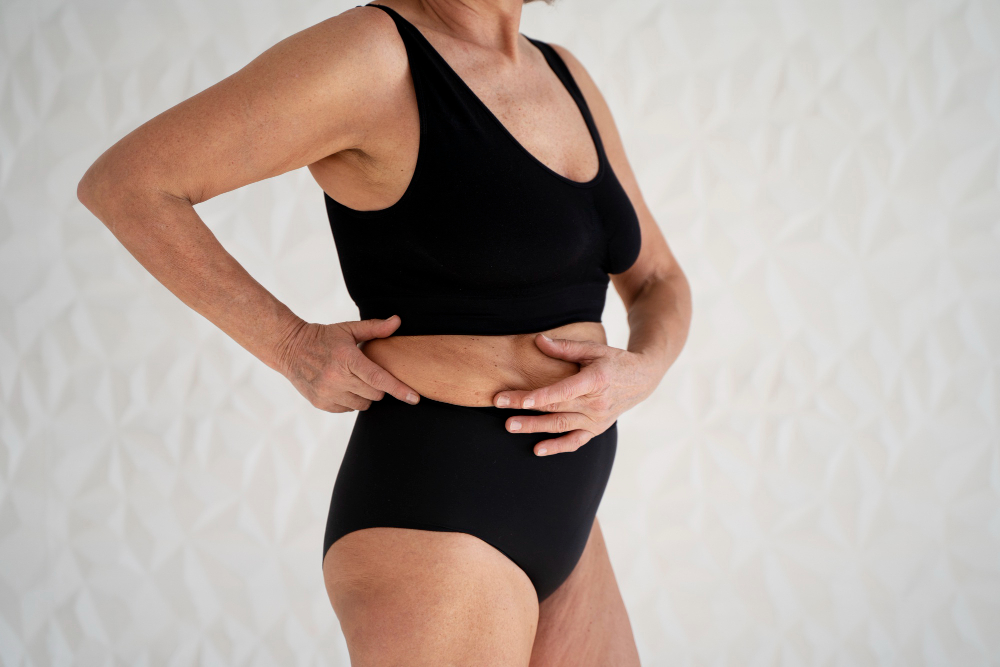
There is no single timeline, and changes in abdominal fat or bloating do not follow the same pattern for everyone. Changes in abdominal fat and bloating may respond to activity, diet, sleep, and treatment of underlying digestive or menopause-related symptoms, but results vary and there is no guarantee that waist size will return to what it was before menopause. Mayo Clinic reports that weight gain may continue at an average rate of about 1.5 pounds (0.7 kg) per year during the 50s, although that is a population-level estimate rather than an expected outcome for every woman.
Two points are encouraging. Johns Hopkins describes the steepest gain as clustering around the transition. Results still vary from woman to woman, and steady changes to strength training, activity, sleep, and eating usually matter more than any quick approach.
Is There a Best Probiotic for Menopause Belly?
No product has been shown to be the best probiotic for menopause belly. A systematic review and meta-analysis included six studies from five randomized controlled trials with 281 postmenopausal women with overweight or obesity. The analysis found small improvements in insulin, insulin resistance, and TNF-α, an inflammatory marker, while changes in body adiposity and lipid measures were not statistically significant. That does not support probiotics as a proven strategy for reducing menopause belly fat.
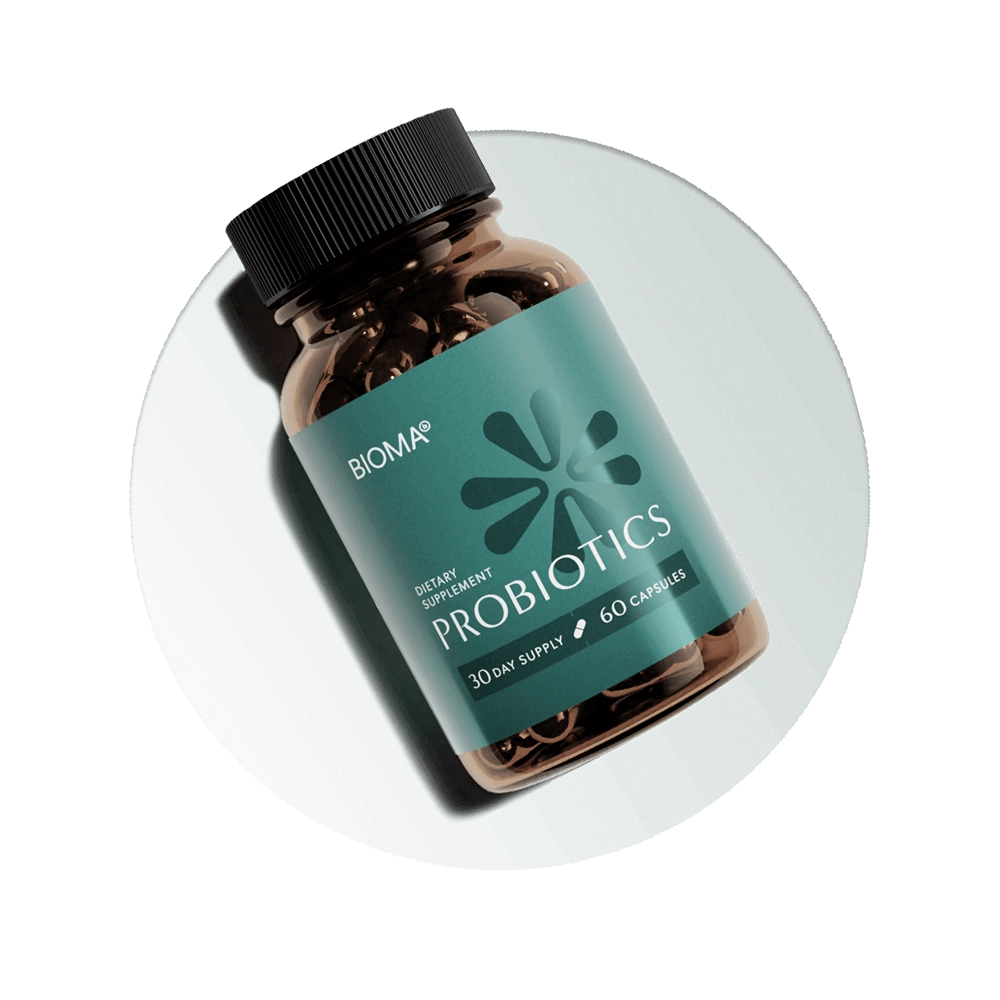
Effects also depend on the strain, according to the National Center for Complementary and Integrative Health, so results for one product don’t apply to another. Some women still consider probiotics for menopause alongside diet, exercise, and sleep, and For women who choose to try a probiotic for digestive symptoms, Women’s Health Concern advises following the manufacturer’s instructions, monitoring its effects for at least four weeks, and choosing a product recommended by a healthcare professional. Bioma’s menopause formula contains four Lactobacillus strains: L. plantarum, L. brevis, L. rhamnosus, and L. acidophilus. It also contains tributyrin, a butyrate-releasing compound. Research on probiotics as a category does not establish that this specific formula will reduce menopause-related belly fat or bloating. The directions are two capsules daily with water before breakfast. People with underlying health conditions, a weakened immune system, or concerns about supplement–medication interactions should discuss probiotic use with a healthcare professional.

When to See a Doctor
Most bloating in menopause has common explanations, but new or persistent symptoms deserve attention. Women’s Health Concern advises reporting persistent changes in bowel habits and seeking urgent help for sudden, severe abdominal pain. Persistent or frequent bloating should not automatically be attributed to menopause. NHS guidance lists a swollen abdomen or bloating that occurs frequently — roughly 12 or more times a month — among symptoms that should be checked by a GP, particularly when symptoms are new, persistent, worsening, or accompanied by pelvic pain, feeling full quickly, or urinary changes.
Sources
- Johns Hopkins Medicine. Menopause and Weight Gain. https://www.hopkinsmedicine.org/health/expert-qa/menopause-and-weight-gain
- Mayo Clinic. Menopause weight gain: Stop the middle age spread. https://www.mayoclinic.org/healthy-lifestyle/womens-health/in-depth/menopause-weight-gain/art-20046058
- Cleveland Clinic. Visceral Fat. https://my.clevelandclinic.org/health/diseases/24147-visceral-fat
- Women’s Health Concern. Digestive health and menopause (fact sheet, July 2025). https://www.womens-health-concern.org/wp-content/uploads/2025/07/36-NEW-WHC-FACTSHEET-Digestive-health-and-menopause-JULY2025-A.pdf
- NHS. Ovarian cancer: Symptoms. https://www.nhs.uk/conditions/ovarian-cancer/symptoms/
- Probiotics and Antimicrobial Proteins. The Effects of Oral Probiotic Supplementation in Postmenopausal Women with Overweight and Obesity: A Systematic Review and Meta-analysis of Randomized Controlled Trials. https://link.springer.com/article/10.1007/s12602-022-10037-3
- NCCIH. Probiotics: Usefulness and Safety. https://www.nccih.nih.gov/health/probiotics-usefulness-and-safety
- Bioma Health. Probiotics for Menopause. https://bioma.health/menopause-probiotics
Related articles



Less gut discomfort. More freedom to enjoy life.
Take our 1-min quiz to find out your gut type and get personalized advice and probiotics to relieve constipation, bloating, and other digestive issues.


